
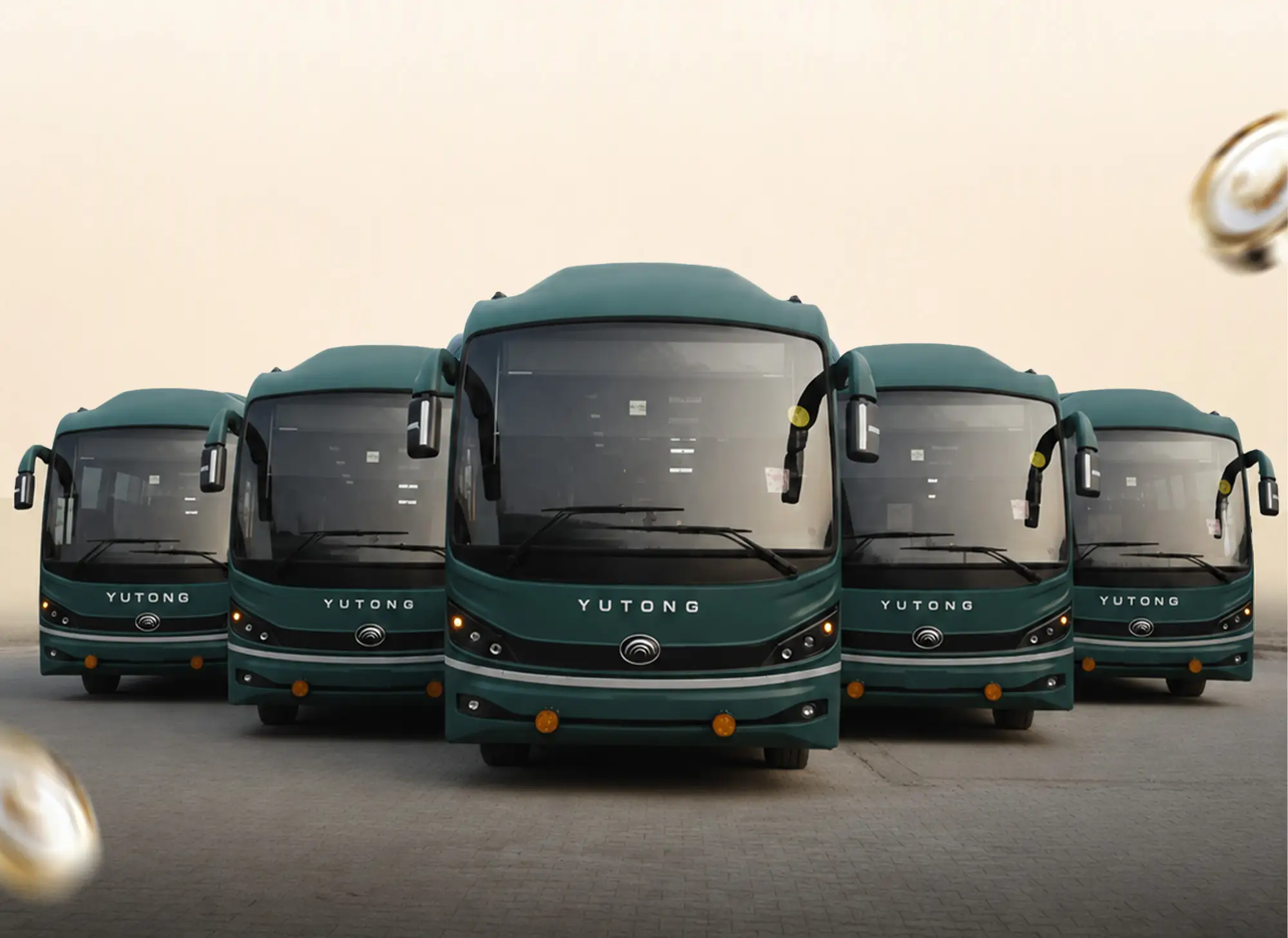
The cooperation between the Syrian Company for Automotive Industry, SCAI, and China’s Yutong could represent a strategic opportunity to move Syria’s transport sector away from heavy dependence on imported vehicles and toward a more sustainable model based on gradual local manufacturing, knowledge transfer and national workforce development.
According to SCAI’s official platform, its current and targeted cooperation tracks include international companies such as Yutong. The company also states that its partnership strategy is not based on short-term trading, but on manufacturing, localization, knowledge transfer and sustainable industrial value creation inside Syria.
This direction comes at a time when Syria’s public transportation system requires more than the introduction of new buses. It needs a broader modernization program covering fleet management, maintenance, route planning, service quality and the integration of industrial investment with the mobility needs of cities and provinces.
From Bus Imports to a Local Industrial Base
The project’s main strategic value lies in its potential to move the Syrian market from importing fully built vehicles or conducting limited assembly toward establishing production lines, developing quality-control systems, training engineers and technicians, and creating a local network for spare parts, maintenance and after-sales services.
Industrial localization does not necessarily mean manufacturing every component locally from the first stage. Similar projects usually begin with assembly and final vehicle preparation before gradually expanding into locally manufactured seats, body components, interior fittings, electrical harnesses, metal parts and selected plastic products.
The success of the project should therefore not be measured only by the number of buses produced. It should also be evaluated through the amount of technical knowledge transferred, the number of Syrian companies integrated into the supply chain and the factory’s ability to adapt vehicles to local road, climate and operating conditions.
Supporting the Reorganization of Urban Transport
According to Jadwa Al-Yaqeen Investment’s analysis, locally produced buses could help address part of Syria’s accumulated public transport shortage, particularly in major cities and underserved areas where route coverage and service frequency remain insufficient.
However, new buses alone will not solve the sector’s structural challenges. Effective reform requires updated route studies, reliable timetables, digital fleet tracking, transparent fare-collection systems and maintenance centers capable of sustaining high fleet availability.
The introduction of modern buses may also support a gradual replacement program for ageing minibuses and buses that have exceeded their economically efficient operating life.
Such a transition should be implemented through a balanced framework that protects the interests of existing drivers and operators. They could be integrated into the modernized system through operating companies, service contracts, cooperatives or financing programs that allow them to replace outdated vehicles.
Public-Sector Participation and Market Competition
The project may also facilitate a stronger role for public institutions or state-owned operators on urban and intercity routes. Operators with modern fleets and stronger organizational capacity could increase passenger capacity and improve service reliability, particularly on routes suffering from shortages.
The preferred economic model, however, should not replace a private monopoly with a public one. Syria needs a regulated transport market in which public and private operators compete under common standards for safety, maintenance, scheduling, pricing and customer service.
Public operators may focus on socially important routes that are commercially less attractive, while private companies participate in high-demand routes through transparent contracts and measurable performance indicators.
Knowledge Transfer and Workforce Development
The long-term value of cooperation with Yutong depends on whether it includes practical knowledge transfer across the industrial and operational chain, including:
- Automotive and industrial engineering.
- Production-line planning.
- Manufacturing and assembly processes.
- Vehicle testing and certification.
- Safety and quality-control systems.
- Inventory and supply-chain management.
- Preventive maintenance and diagnostics.
- Driver and operator training.
- Warranty and after-sales management.
- Digital fleet-management systems.
Yutong offers a broad portfolio of city buses, intercity coaches and new-energy vehicles, as well as fleet-management, training, maintenance and technical-support solutions.
Using this experience effectively would require clearly defined training programs, measurable technology-transfer obligations and a gradual plan to increase the participation of Syrian workers, engineers and suppliers.
Economic Impact and Employment Opportunities
A bus manufacturing facility could create direct employment in engineering, production, quality control, administration and maintenance. It could also create indirect opportunities in metal fabrication, plastics, glass, seating, electrical systems, painting, logistics and industrial services.
Local production may help reduce part of the cost associated with importing fully built vehicles and retain a larger share of transport-sector expenditure within the national economy. The greater the local-content ratio becomes, the greater the project’s domestic value-added impact is likely to be.
In the longer term, the facility could potentially serve nearby markets if it achieves competitive standards in quality, cost and after-sales support. Export potential, however, would require stable production, recognized compliance certificates, efficient logistics and regional access to maintenance and spare parts.
Key Implementation Challenges
The project’s success will depend on several critical factors:
- Availability of long-term industrial financing.
- A realistic assessment of domestic demand.
- Reliable supplies of components and spare parts.
- Adequate electricity and industrial infrastructure.
- Progressive and measurable local-content targets.
- Recognized vehicle safety and testing standards.
- Effective warranty and maintenance systems.
- Financing mechanisms for fleet operators.
- Integration with a national public transport strategy.
- Transparent operating and procurement frameworks.
If electric or other new-energy buses are included, the project will also need charging infrastructure, grid-capacity studies, battery-management systems and specialized emergency and maintenance training. Yutong presents charging-station planning, vehicle management, technical support and diversified training as part of its integrated electric-mobility solutions.
Jadwa Al-Yaqeen Investment Perspective
Jadwa Al-Yaqeen Investment believes that the project could become a turning point for Syria’s industrial and transport sectors if it is implemented within an integrated strategy linking local production, urban mobility planning and infrastructure investment.
The partnership’s real value will emerge when it moves beyond component imports and limited assembly toward national technical capacity, local suppliers, skilled employment and a sustainable after-sales ecosystem.
The bus facility should therefore be viewed not merely as an individual factory, but as the potential core of a broader automotive and mobility ecosystem covering vehicle production, components, fleet operations, maintenance, vocational training and digital transport solutions.
Further disclosure regarding the investment value, annual production capacity, targeted vehicle models, local-content ratio and implementation schedule will be essential for a more precise assessment of the project’s economic and investment impact.